Close to home

If a horse could cry.  I can.  And I do.

Tears flow freely; rain does not.

I cannot stop crying and know my tears do not help unless they can turn to rain.  I am not a religious person, but I find myself praying.  For others.  For the mountains. The animals.  The trees.  My beloved trees…

I think of all the wilds, the wildlife, and what happens to them now, what happens next?

Here, we have rain.  Just a bit, though I suppose it is enough.  Or is it just luck?  Lightning strikes aren’t taking hold. The fire to the south of us is relatively contained.  The rest of the state is not as lucky. This time.  Some time, of course, it will be here. It will be us.  Our mountain.  Our wilds and wildlife. We await. This year.  Next.  Three years from now.  Who knows?  The time bomb upon which we balance precariously in hopeful ignorance.

In my dreams there is fire and smoke.

I can no longer appreciate the red of sunset, for fear it is inspired by flame, for knowing it is enhanced by smoke.

My country is burning.  Though not yet close to my home, I think of all the other homes, built and feral, up in flames.  Now we know it is but a matter of time.

Computer data, scientific models, and the Forest Service.  They said the beetle killed trees wouldn’t burn as bad. This summer, we see they do. Dead timber forests are safer than green, they said. But what burns best in my wood stove? Pardon my lack of science here. I wonder what happened to common sense based on observation of the world around us.

I read an article entitled, “Screaming Trees.”  The tears begin again, for I hear their cry.  How few have heard the silent wail?  We wear our blinders, find a green patch, turn our backs to the ravished red hillsides, and think it is all OK.

Until it comes too close to home.

Observations from up high

This is not a pretty picture.  It is not meant to be.  Only real.  Finding beauty is up to you.  How deep and long are your willing to look, knowing you can look further now through the thinning trees?

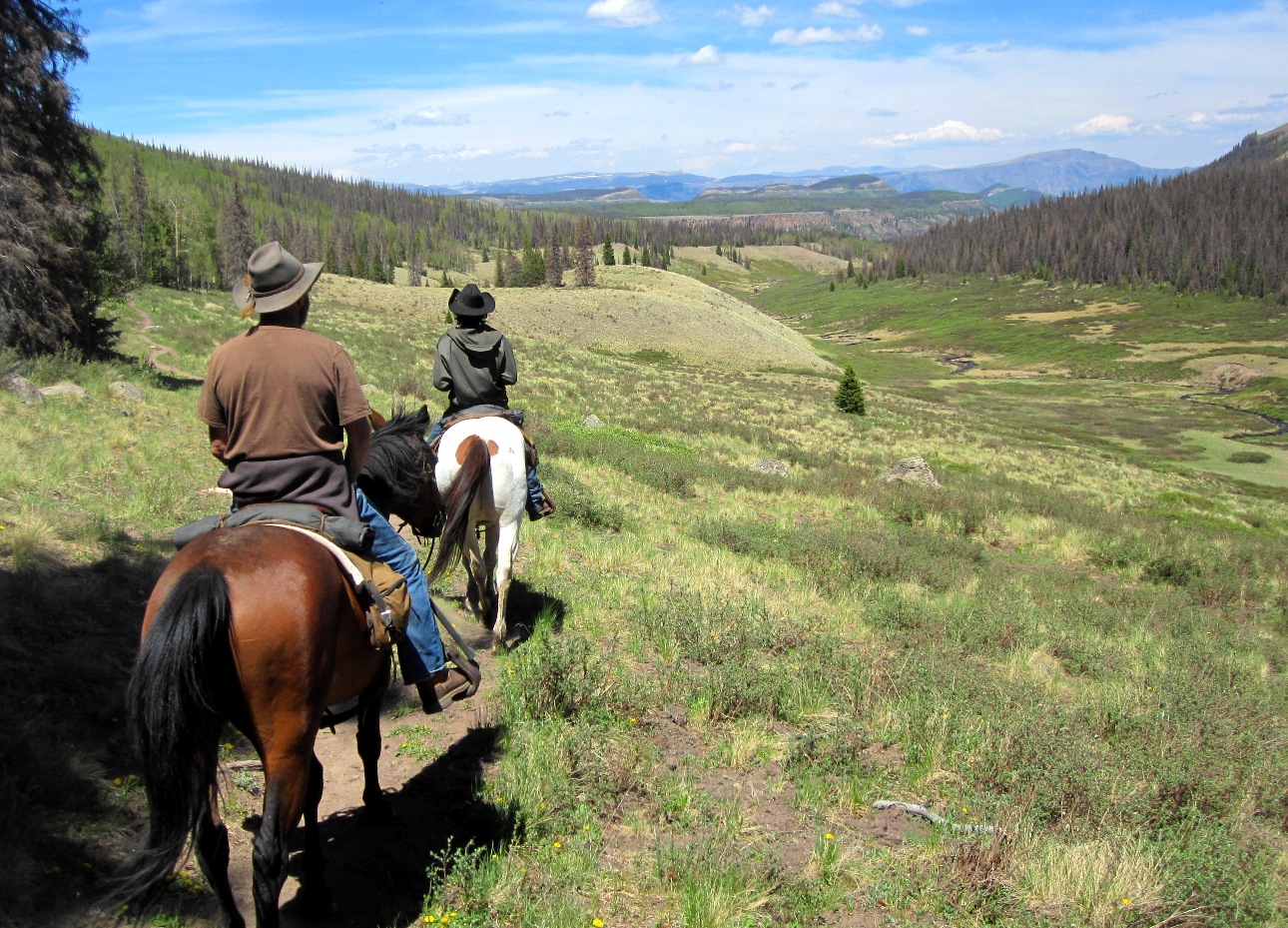
It started with a ride, perhaps the most frightening I have taken by choice.  A simple ride up the Ute Creek Trail, without another horse or human on the way that day, perhaps for days.  From my barn, perhaps a 16 or 18 mile ride, into the Weminuche Wilderness and back.  But here’s the real challenging part:  I rode Flying Crow.

Without wishing to make this all about horses as I’ve been tending to do as of late (it’s that time of year, you know), let me just say I was scared.  At one point (for those who know the trail, the section known as the Funnel Cliffs by the old timers), I dismounted and walked.  I hate to admit that.  That goes against… what I believe for horse training, for riding, for making it up this trail.  Yet, it goes along just fine with my sense of survival.  After my horse stumbled off the trail so many times already (“What are you thinking,” I actually yelled at him, though I think the problem was that he wasn’t thinking; he was too busy looking around for the bogy man that  never showed), and knowing this section would allow no room for error, I decided not to risk it.  I got out of the saddle, held his reins, and walked for fifty feet, and cussed him, Arabian horses, right brain behavior, and my choice of horses the whole way.  On the return trip, however, I remained mounted, and as you can see from my being here to write about it, I survived.

What I wanted to share were my observations of the mountain along the way.  I will try to keep emotion and comments to a minimum.

These are the facts.

Elevation was between 9,550’ where I crossed the Rio Grande and 10,950’ above the forks of the Utes.

I viewed a varying percentage of beetle kill along the trail, from less than 10% (down at the River crossing), to 75% or more of the spruce.

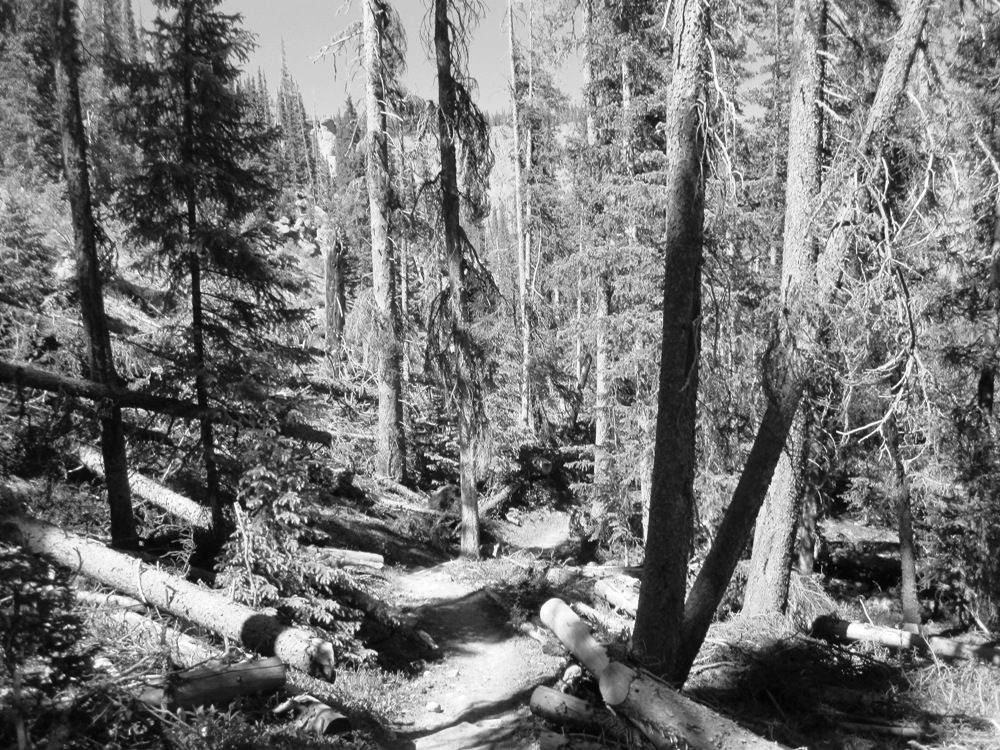
It is often the green trees being blown over (and having to be cut and cleared from the trail in order to ride on).  Even needles catch the wind.

Needle-less trees allow more light on the trail.

The trails and hills are more exposed due to fallen and/or needle-less trees, making a once cool and shady horse ride rather hot.

I had promised Gunnar it would be a cool, shady trail.  I lied.

Places where we have always ridden through bogs hidden in dark timber are hard and dry.  The sun was shining on them directly.

A horse’s footfall is silent when crossing needle lined paths.

These are interesting times.

Clear before me, from as close as my kitchen table, I see the changes.

At times it feels too close to home.

For this is my home.

Next year may be a cold and wet one. But these trees, the deep green mountain, won’t return as long as I live, as long as my child lives.

I leave you then with this.  Delicate balance of hope. A unusual white columbine, so fine and pure, found no higher than the bank of the Rio Grande as she cuts across our property.

In Color

Some say it is ugly.  The pale red hillside before me.  But this, my friend, will never be ugly.  A classic case of learning to see the forest, the mountain, not just the individual tree.

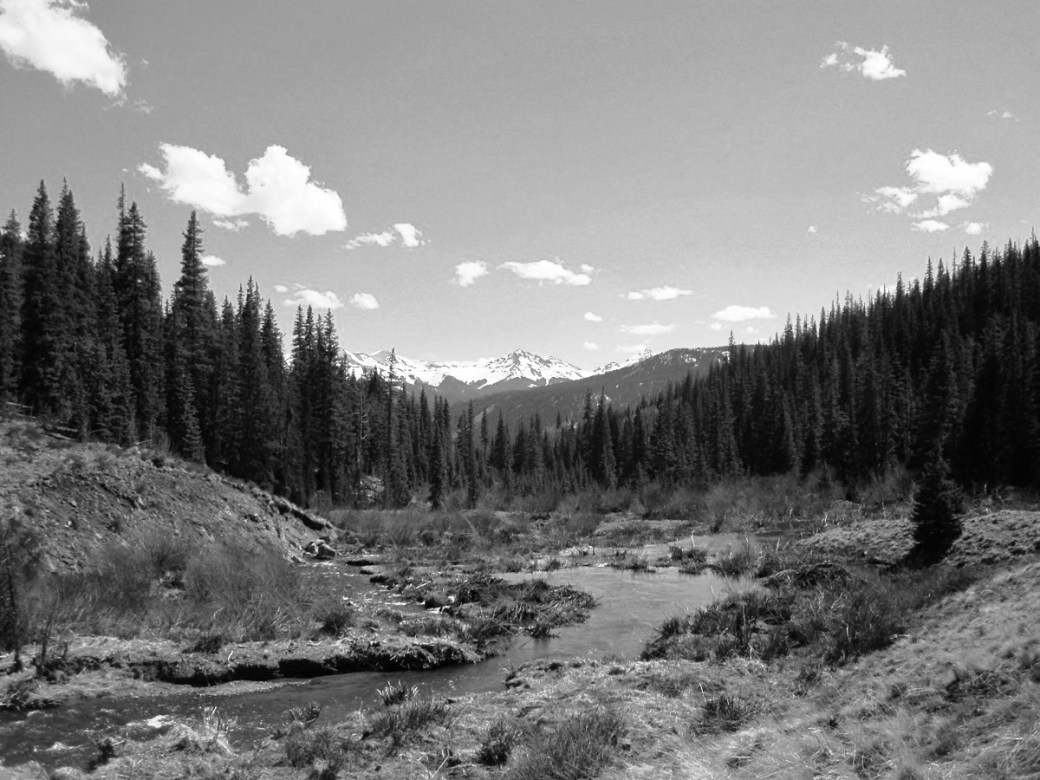
Early morning. Now it is light enough to see color.  There it is, across river, the view before me as I sit at the table and sip my coffee, the reddish brown that showed itself like a crown at the beginning of the season now spreading, pouring down the slopes like the water that eludes us.   We are increasingly familiar with this scene.  Red spruce; they once were Blue.  Next year they will be brown.  And in a few more years, grey.  There is new growth hiding in there.  I know.  And they say the Aspen will thrive and spread upward like wild fire along the dying path of the Spruce. But we see the affects of long term drought there too where on many a south facing hillsides, the established Aspen groves are losing up to fifty percent of the trees.  Their thin bark turning an odd shade of orange with their last burst of failing life.  Tell tale signs we learn to read.  In other areas, we see new young saplings, perhaps four or five years old, bending like grass in the wind without the strength to stand tall.

I say this without emotion. Without opinion.  Simply observation.  Take it as you like.  Call it what you will.

Yesterday we rode up Weminuche Pass in the Wilderness to inspect the ditch.  Riding through the light of needless trees.  Red and brown and grey.  Wind blows and needles fall like hail, tapping a steady tune against the rims of our felt hats.  One can see farther, deeper, more light makes it through the deep forest.  Our horses kick up dust on the trail, making it look like riding through smoke, an old Western film or a premonition of what will be.

Slide Lake in Spring

Wolves.  Wild horses.  Water.

Wouldn’t you say the three most controversial and divisive topics in the west?

I can see both sides on the first two topics and am unable to choose sides.  I can see through the power and passion of emotion ruling both segments to a middle ground where the two should but just won’t meet, won’t budge, won’t give, fingers pointed and backs turned and nothing positive is resolved. That’s where we need to focus.  On the compromise. I guess that’s usually how things end up getting resolved.  But in the meanwhile, it does take both borders to define the middle ground.  Change often requires conflict to come about.

And then there is water.  The first essential to life. The west was built with liquid gold, and our future is pending upon it.  I see no controversy in the obvious and inevitable. What am I missing here, because somehow, we’re not agreeing that there is a problem?  Man based, nature based, call it what you will.  While some places are getting flooded out, pummeled with regular deluges, and learning that natural disasters are a usual occurrence, the Southwest is drying up.  Yes, even in the high mountains. Even in my back yard.

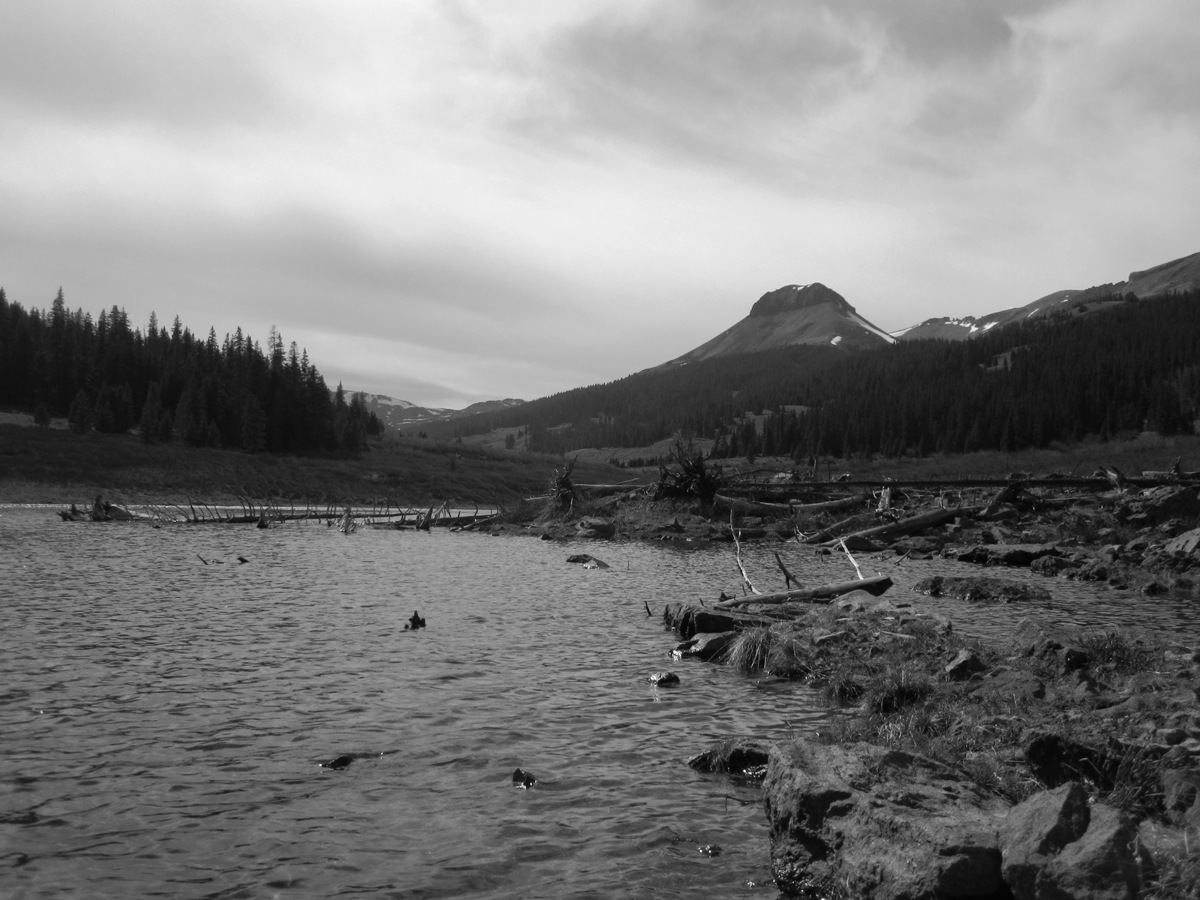
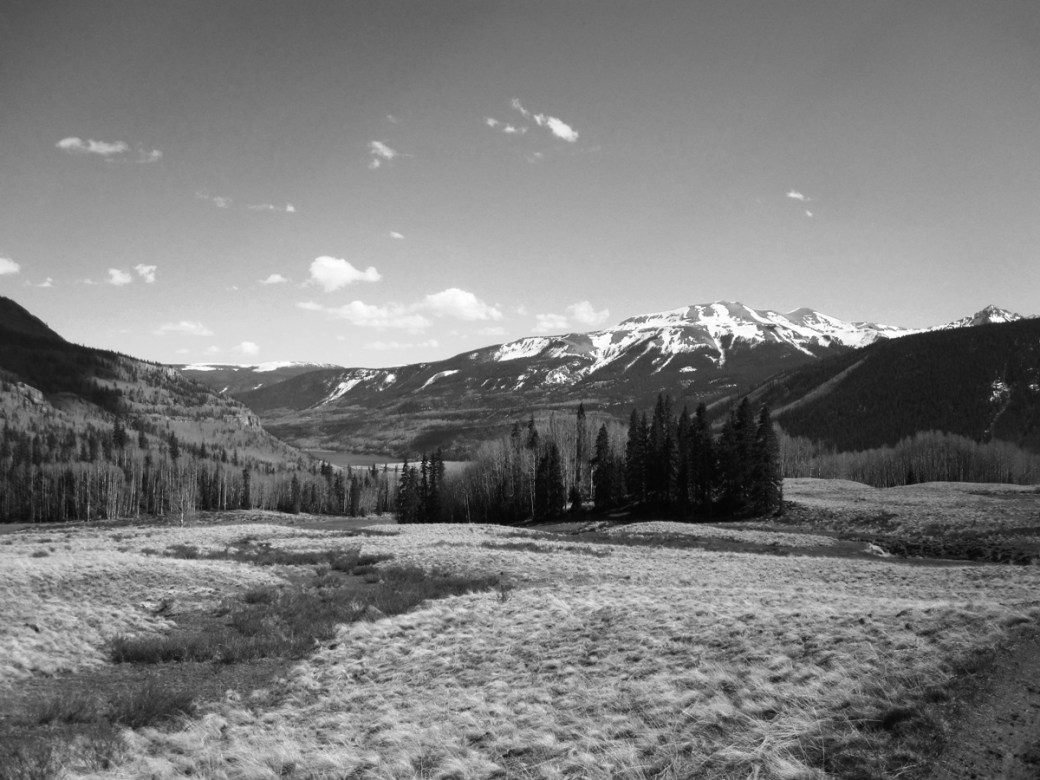
Yesterday Forrest and I hiked up West Lost Trail to Slide Lake.  Elevation 11,400.   We wore shorts and t-shirts.  There was green grass, wild flowers and the dog swam in the waters while the squeals of the pika and marmot echoed on the hard face of the rocks surrounding us.  And everywhere we looked the one rich green slopes were striped with the red and brown of dead trees defining draws and shoots as the beetle kill seemed to be pouring from the top down.  If you don’t get this picture, figure this out.  11,400 feet elevation should just be melting out in May.

Data from the NRCS as of May 18th show the Upper Rio Grande Basin snowpack level, which was reading at 52% of average, dropped to 14% with the peak a full month ahead of average. Current reports from the Snotel at Beartown read the water equivalent of our snowpack to be at 1% of average.

These are not opinions.  There is no emotion here.  These are simply stated facts, real and raw.  Do you see a problem? So now the question is raised.  What are you going to do about it?  What am I going to do?

Maybe it’s just this year, we say.  Maybe it’s just a coincidence. Maybe we don’t have a do a thing.

“Call it what you will” Change

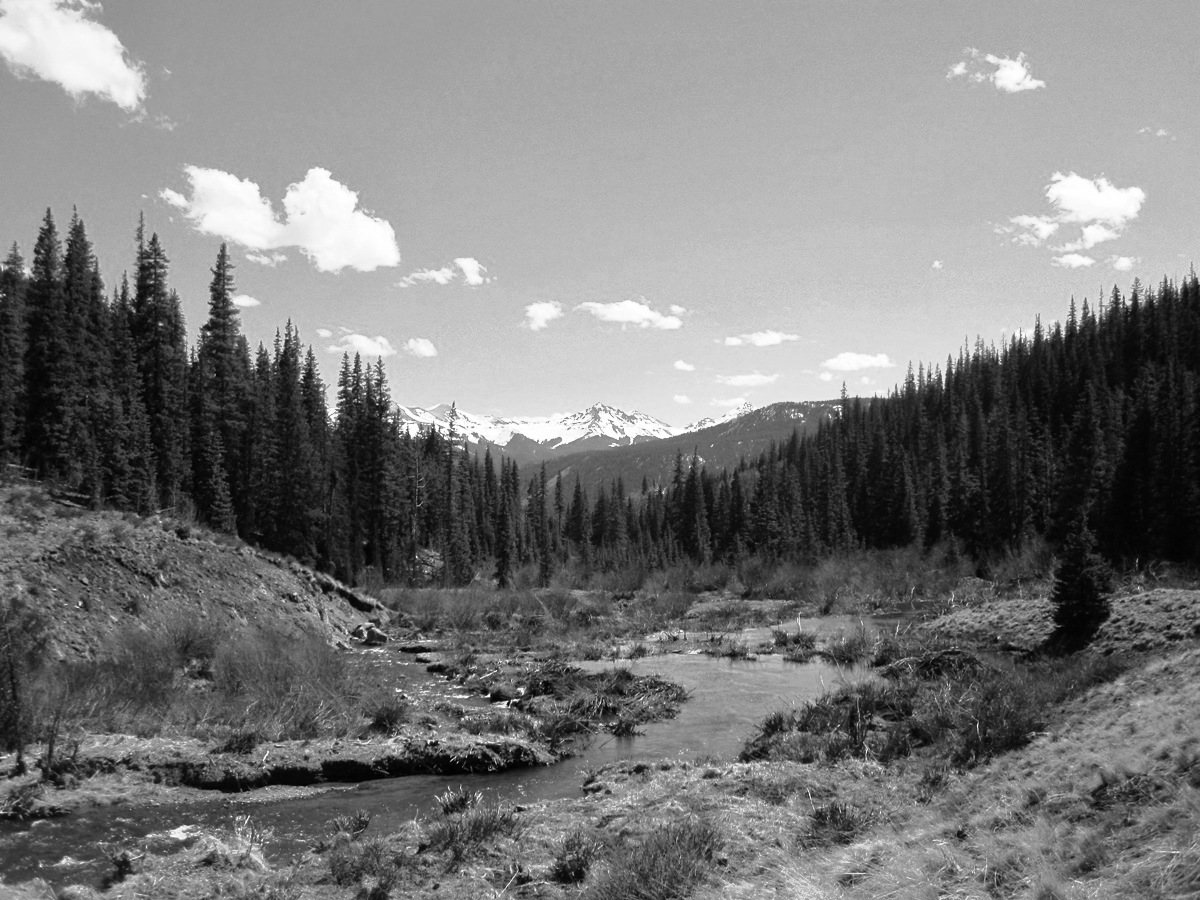
One advantage to beetle kill.  It’s not too hard to find a dead tree to fall  across the high spring waters.  And then I am on the other side.  Where I wanted to be.  As if I wasn’t far enough.  Not for me.

We are playing hooky from work.  I’m tired of fencing and moving the soil from my garden beds by shovel and wheelbarrow from the old place to the new.  The sun seduces and we are lured by the sound of the creek beside which we tread, as sweet as the Pied Piper calling…

We walk and walk surrounded by last year’s bunch grass, leafless trees and the swelling buds of the willows.  We see old tracks of the moose, set when the ground was still soft and damp.  New tracks of elk in the dusty top soil.  Our tracks.  None others.  This matters to me.

Dry and dusty.  Bogs that we have held our breath crossing horseback for fear of punching through and sinking in are already firm.  I don’t remember when they last were muddy.

The high country looks like early June.  Shrinking snow banks and exposed windward slopes. My husband kicks up powdered dirt behind him on his motor bike. Grass crunches underfoot. The creeks are running rather full but clear and we wonder if the high brown waters are finished for the season.  It used to peak in early June.  Then mid May.  This year it seems to me it was the end of April.

But there is no global warming.  Then what do you want to call it?  Call it something.  For something it is.  I don’t know what it is or why or how.  But I see it.  Look around.  Can’t you see the beetle kill, once green hillsides turning brown, the dried up bogs, the high country already melting, springs and little creeks going dry in early May?

Just a fluke year?  Then how come it’s been progressively worse since I arrived on the scene after the driest year on record, the start of the big drought?  I keep track of temperatures and in the last ten years, we’ve not seen much change.  But we are seeing the springs drying up, the aquifers dropping, bogs turning solid and hard. Birds arriving and nesting sooner.  High waters earlier each year.  This is nothing?

It is something.  You are not blind.

It is something.  I don’t know what, but I’m not clinging to the comfort of a closed mind.  I’m not claiming I have the answers or gripping to ones I want to believe in.  It’s not politics or religion.  It’s real and it’s kind of sad.  And maybe it’s a natural cycle.  Who knows?  But how can you be such a fool to believe that all of man’s raping of the land and burning of fuels to power our ever growing needs and greeds in such a short period of time would have no impact?

Only I believe the earth is stronger than you or me.  So though you may have a hundred years of coal left to burn, have at it.  Then fade away.  The earth might actually be better off without us.

An early summer tourist arrives on the mountain for a stay and I hear a generator being run for a microwave oven while we’re getting our power from the sun and burning dead wood that is all around us. Wood that will burn if not in my woodstove then when?  Or will man be God enough to suppress the wildfires and let the old wood rot.  Which up here where it is high and dry is longer than my lifetime.

And perhaps that’s it. We forgot how to look beyond our lifetime.

I want to leave this world a better place for my child, his children, and the generations after them.

There are consequences to every actions.  Cause and effect.

We are not God.  We are not Mother Earth.  We pretend we are one and think we can handle controlling the other, but I can’t say I’m impressed.  Some say we are stewards of the Earth.  I think we’re doing a crappy job.  We take what we want.  Burn, slash, rip and tear.  It’s all about bigger and better, shiny and slick.

I don’t know.  I look around on a day like today, with the only human trace a small path through the woods or drawn across the hillside, and I think it’s pretty darned beautiful out there. And I don’t think you or I could do much better than that.

What do you choose to do?  What do you believe? And then, what do you see?  There before you.  Not just books and papers and scientific studies and biased reports.  But there before. For real.  Open your eyes and look. And here, in a land you tell me love, though often no more than a week a year if you are lucky enough to fit that time into your busy schedule.

If you can’t see it, your eyes are more closed than your heart.