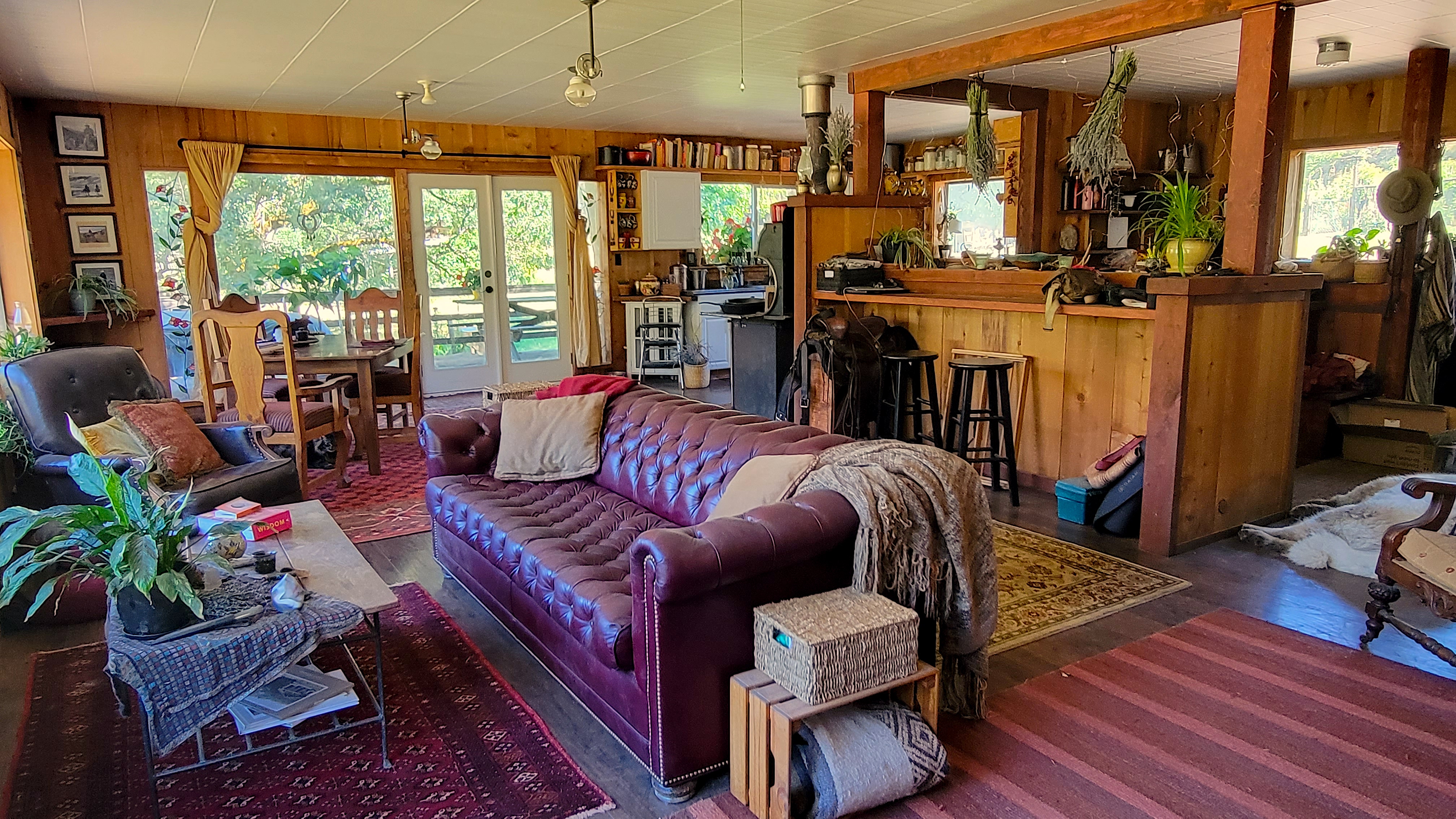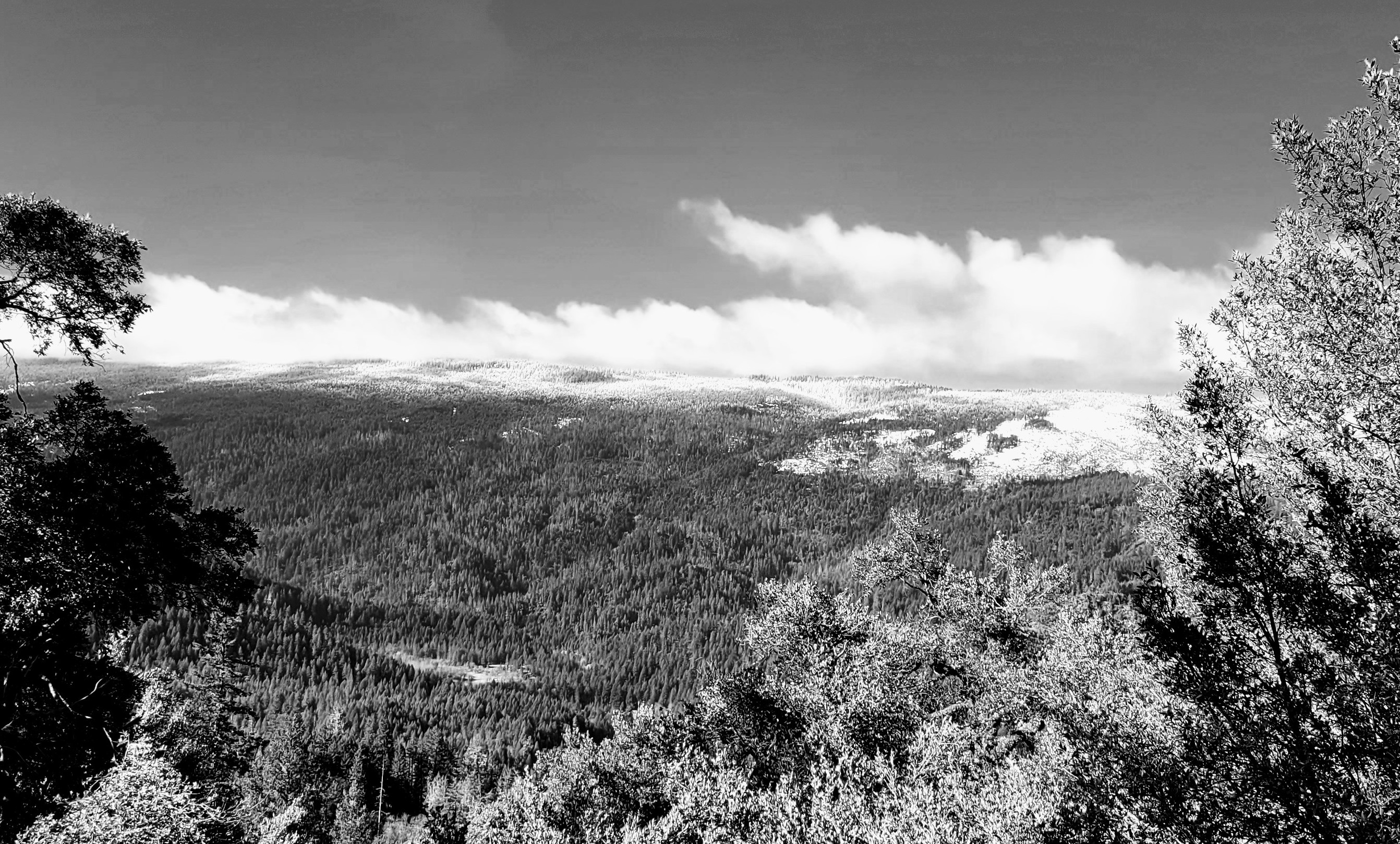
(looking back at the healthy forest surrounding our little bit of paradise – that little clearing in the center – here in the far north of California)
~
Contemplating slow living and the complexities of the simple life.
So much of that is based on making the most of what you have, and doing it yourself.
As in, if you want lumber for building…
You fall trees, skid them, clean the slash, load logs on the mill, saw them to size, stack them.
And then in this case… haul them from here to there.
California to Colorado.
Simple living, sounding somewhat complicated.
I’ll explain.
This is my first attempt at sharing a video on this blog. I want to show you what milling is like. However, it’s hard to hold a device in one hand AND crank the mill with the other. So I may have some figuring out to do. In the meanwhile, go ahead and say it: Cinematography is not my strong point.
Bob did a lot better. This is the video he took after I whined about how bad mine was.
~
So about the mill.
It’s slow, old, free and ours.
It was left behind at another “high and wild” property we once owned, just for a little while. Another fixer upper. That place was a little TOO high. At an elevation of 11,400 feet, turned out to be too much even for Bob and me. We got headaches, bloody noses, had trouble sleeping, got battered by the elements… but we did fix the place up nicely and flipped it.
And, bonus: we got this mill out of the deal.

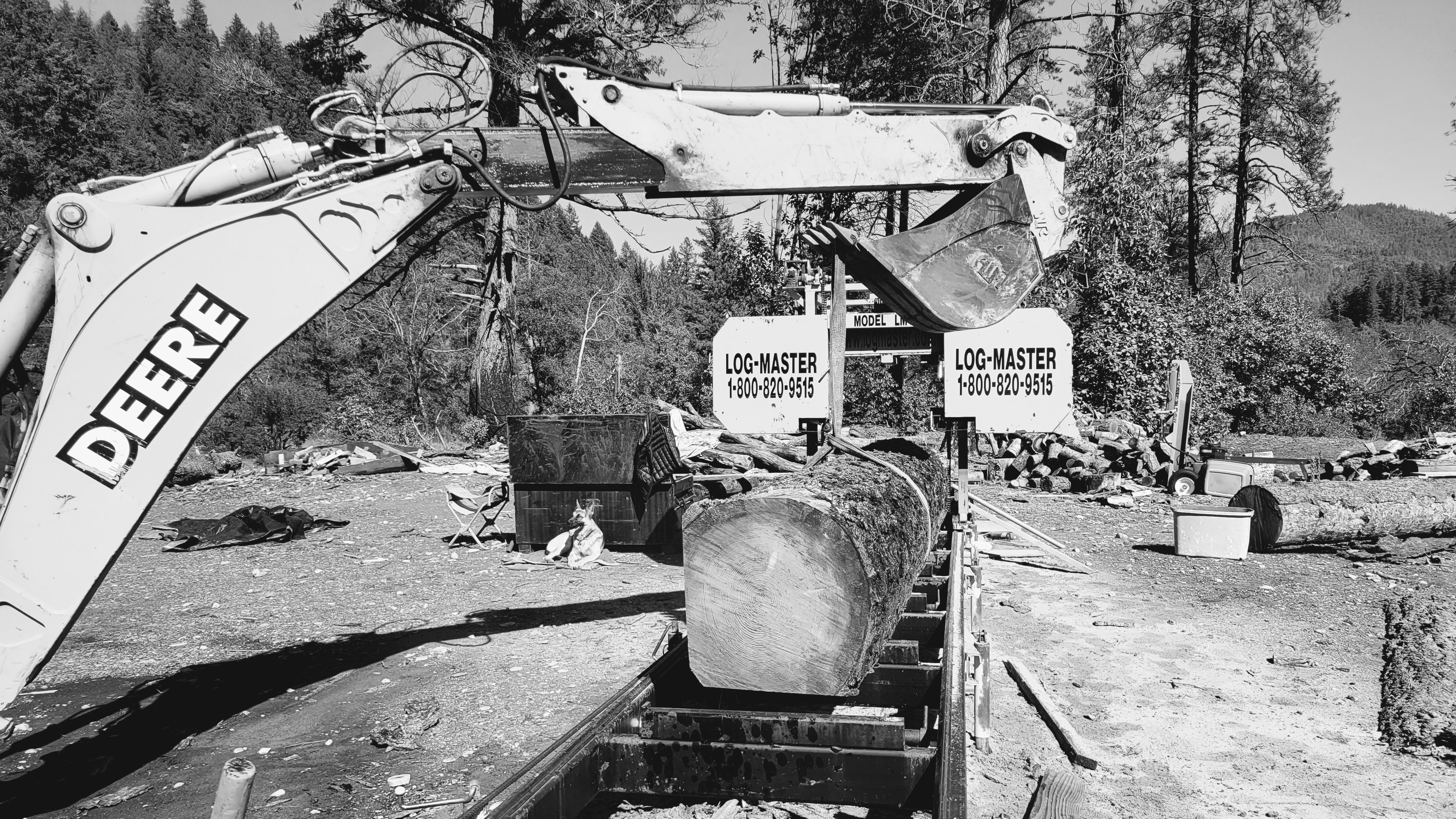
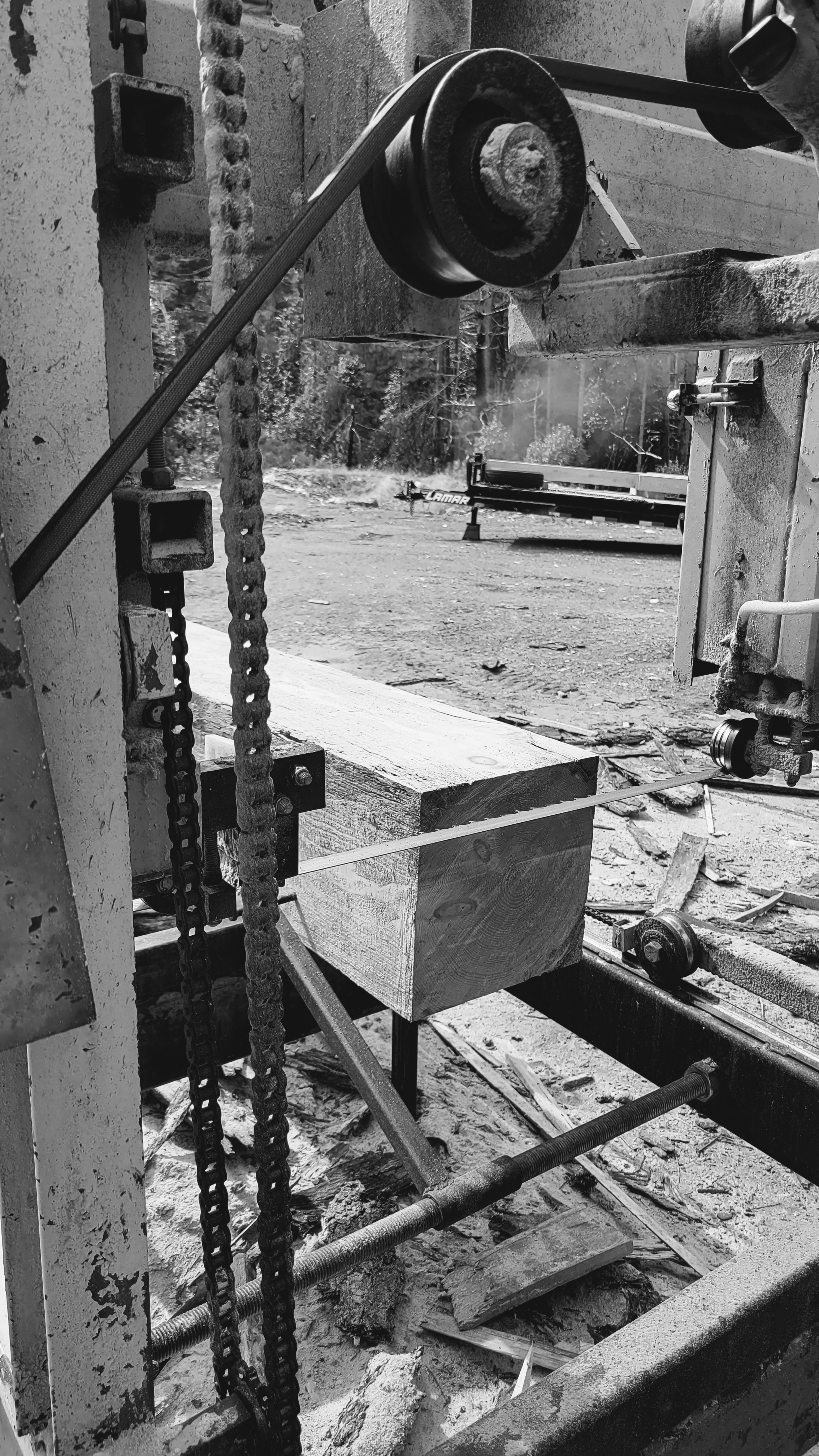
Yeah, I know, it’s old. Go ahead and say it (Bob does all the time): too old! It’s crazy slow. You gotta crank the wheel for several minutes just to raise or lower the carriage that holds the blade, then crank some more to move the carriage as the blade inches it way through the wood. Crank again to raise it, crank it back to the beginning, then lather, rinse, repeat. It’s a lot of cranking and a helluva a test of patience. Apparently I have a lot, because even as the one doing all that cranking, every time Bob shows me pictures or starts talking about a new mill, I’m quick to shut him down.
“This is what we have,” I remind him (and myself). And though it’s slow, check it out: it works. We’ve used more modern mills. You know, those fancy ones with bells and whistles, flashing lights, keyboards, electronics or at least hydraulics that cost about as much as a mortgage. This one is gear and chain and crank drive, do your own measuring and your own math, and it was free. Simple. Slow living, slow milling, see what I mean?

Slow as it is, I love it. Yes, I love milling. I love the smell of the wood, and working out in the elements (most times). I love watching dead trees turn into valuable lumber. And I love working with my husband, which after twenty something years building together has brought us to that place of operating in relative wordlessness and this flow that feels almost like a dance. We know what needs to be done, move in unison, use hand signals, nods and knowing glances (and probably a few grunts) to converse. Slow and steady, it works for us.

Despite clothes, hair, and all parts of exposed (and somehow even covered) skin getting enrobed in sawdust every afternoon, the pride in making our own lumber from our own trees is a thrill for me. Maybe I’m an odd sort, but I’m in the right place.
And slow as the mill and the process is, it does work. Beautifully. We milled all the dimensional lumber for that “high and wild” remodel with this mill. There, a buddy milled all the logs for an entire cabin from the beetle kill trees on that land. When we moved from Colorado to California, we brought the mill with us and processed all the lumber for this remodel we’re living in now (you can see some of it HERE.). And maybe when we’re done milling here this spring, chances are we’ll move it back.
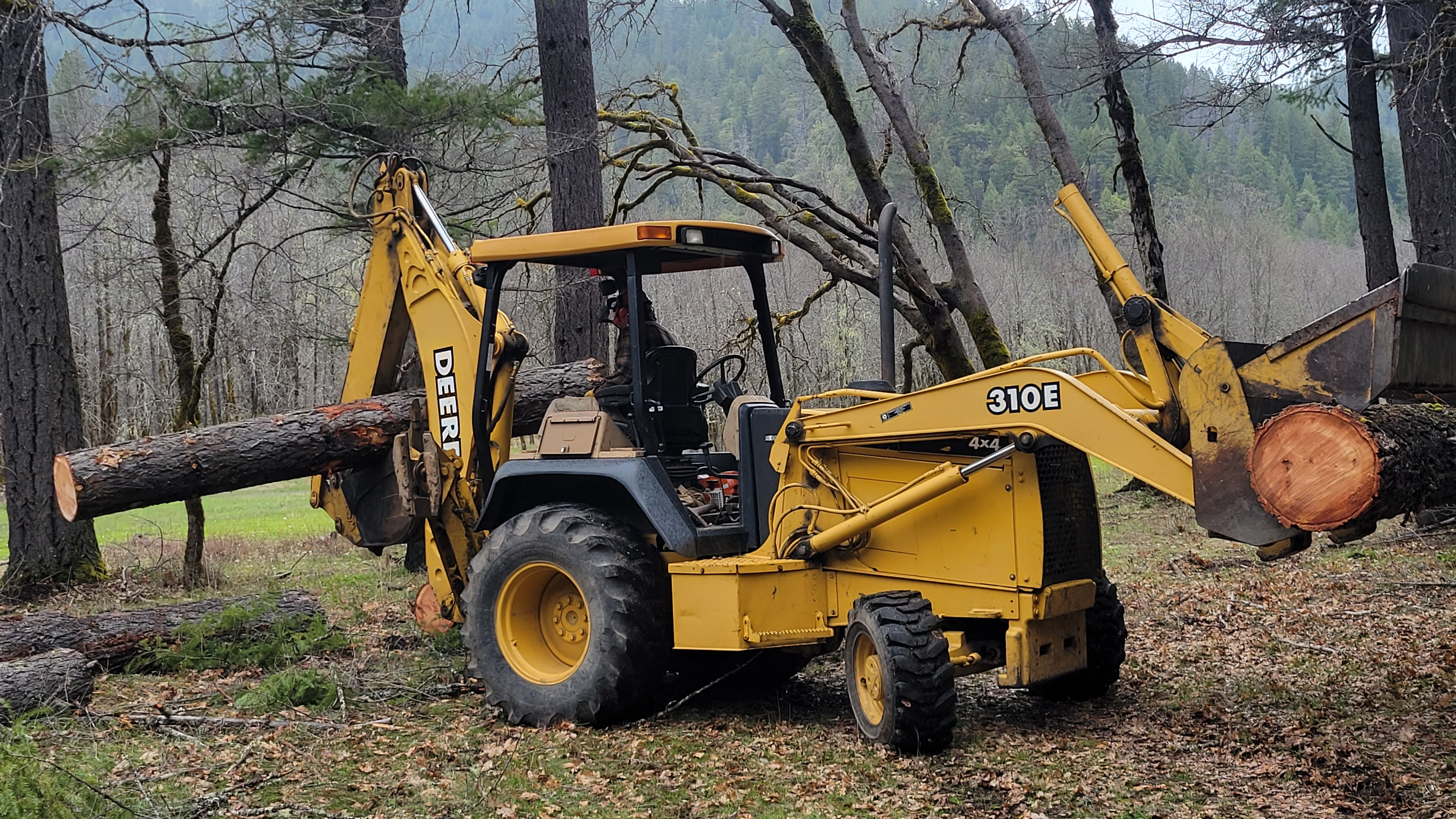
Here and now, because of that mill and the beetle killed timber on this land, the majority of materials for our upcoming build are free. (Oh and a big shout out of thanks to my sis and her man for the incredible windows we scored as they replaced theirs!) Beat that. Makes slow somehow okay that way.
The process starts with Bob doing most of the work you forget needs to be done before you even get to mill: falling trees, delimbing and clearing slash, skidding logs, loading them onto the mill. Then I get to do my magic.
I’m the (not necessarily) smooth operator of this old roaring beast, which entails a lot of cranking as I said: cranking her up and down and back and forth, moving the blade through the log with each pass. Sloooooowly. Like everything about this process. Yet… beautifully! At least it’s beautiful to me.
We’ve used it so long, done it so much, by now it’s muscle memory for me. I’m so used to the sound and feel I can do it with my eyes closed. And often I have to. Because when the wind blows my way, which often times it does, so does the sawdust.
And after almost every pass, there’s the joint effort of rolling the log on the mill, which involves a bunch of prying with peaveys and few grunts and groans, then carrying each board off to be sorted and stacked.
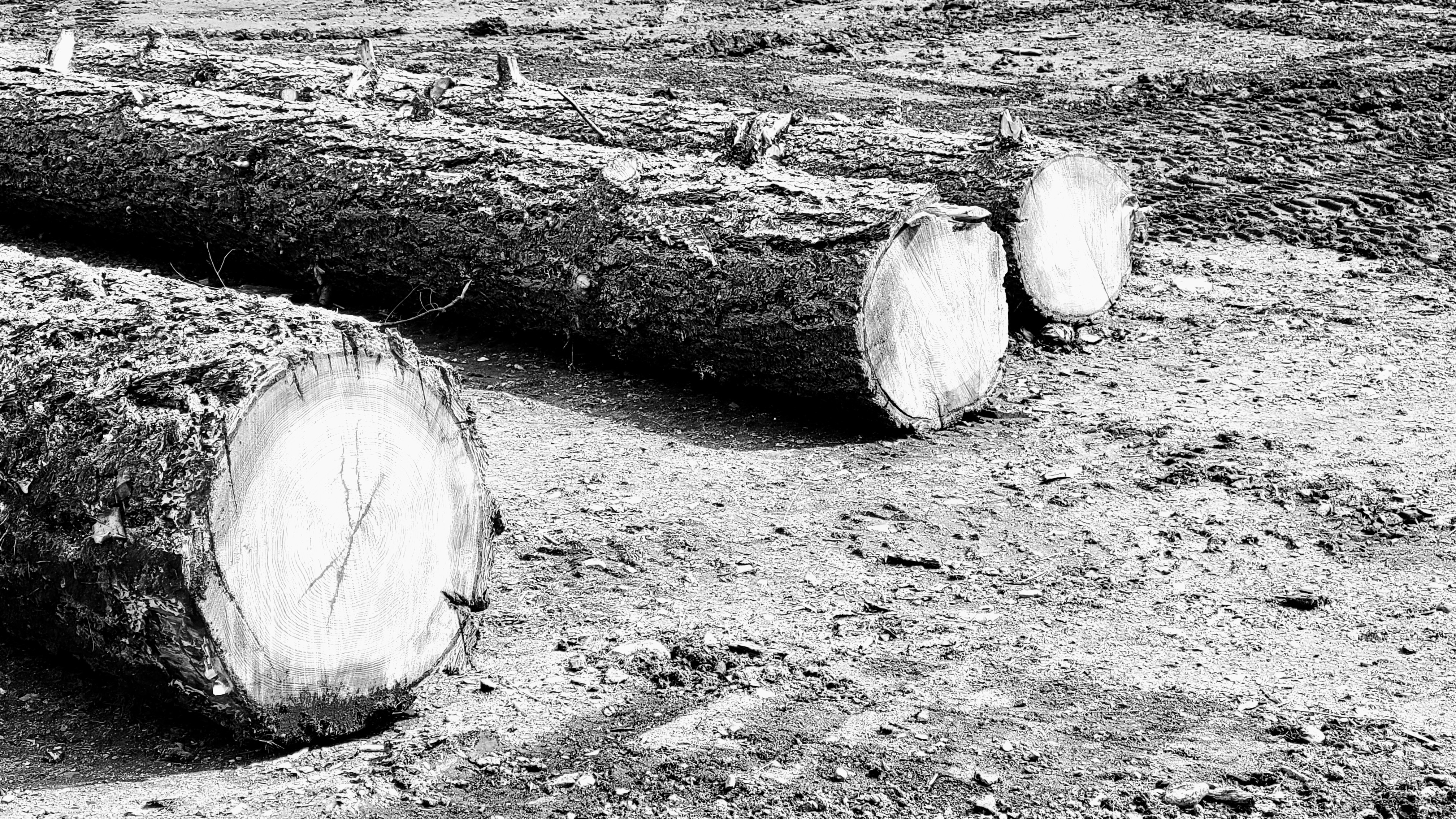
Board by board, beam by beam, slowly we’re amassing what we need to build a new home.
It’s exciting. Rewarding in so many ways. Not the least of which is that in the process of taking down trees to mill, we’re cleaning up our land. See, a lot of the doug fir is dying. Beetle kill. Not even close to devastating and depressing as it was back fifteen years or so ago in southern Colorado when we witnessed the demise of 90% of the blue spruce trees there. Year after year, mile after mile, mountain after mountain, a giant wave, gradual and all consuming, turned the hills from green to gray. All those trees, killed by a tiny beetle no bigger than a grain of rice.
Pine beetles, bark beetles, call them what you will. They’re in California too. Only here in Trinity County, at least on our land and the hills surrounding us here, it doesn’t feel devastating. It isn’t. See, here, when one tree dies, another spreads it wings and seems to take flight in the newfound open space. So as some of our doug fir die, the black oak, white oak, live oak, oregon ash, alder, dogwood and madrone already in place, open with the added air space and water that the crowding conifers otherwise devour. It feels somehow natural, normal, beautiful to witness this change over the past nearly six years we’ve been here, as parts of the land unfurls like a giant exhale, revealing the sky and a sense of spaciousness, and we watch as part of our land shifts from a conifer forest to a healthy oak grove. The diversity of species here is remarkable. You barely notice the loss of evergreens were it not for the low stumps left behind.
Thanks to these beetles, we have plenty of trees to build with.
Damn. After the devastation our Colorado mountains endured due to those little buggers, I never, ever thought I say something nice about them.

And so it goes: if you want lumber, fall trees, clear slash, etc. and then… haul to Colorado.
So about that part about hauling to Colorado…
Really?
Yes, really.
See, even after milling off the rotted two to three inches that many of these big trees often have around their girth, what we’re left with is a lot of lumber. Good lumber. Really good, and better than what we’d mill in Colorado. These dead doug fir have heavier, heartier wood than beetle kill blue spruce. Wood strong enough for framing, thick enough to stack for walls, and dense enough to hold heat inside the cabin they’ll one day be.
That’s what this work is all about now. Like mining for gold. Getting down to the good stuff. And this wood is good.
And here’s the thing. Time is of the essence. Sure it would be great to take our time and log and skid and peel and notch and slowly stack logs from our Colorado land where this house will be. And for our next project, that’s what we plan to do. (Yes, knowing us…)
But for now, for starters, for just getting a cabin built, quick and simple and safe and sound, lets be real. We won’t have that time this year. The only chance we have of getting this project done and having a roof over our head and solid structure to winter in (which in the high wild mountains of Colorado is a serious thing) is to do it this way – mill the lumber now, while we can, before the crunch of summer building begins. Or spend a lot of money we don’t have and hire some crew to do it all, wham bam.
Tempting as that sounds some times, that is not what we’ll do.
Slow and steady, we’ll get it done, by making the most of what we have. A lot of beetle killed trees and one old mill. And we’ll work around what we don’t have: time! Building a house from the ground up in the short season between the ground thawing (May) and the ground freezing again (October) – and building something solid and secure enough to winter in – is already a daunting project for a couple that some say have a few too many years behind them to be taking such a project on. Oh yeah, and in addition to the cabin… there’s getting the solar, septic, greenhouse, horse shelter, chicken coop and wood shed (full) done during that time frame as well.
Geez, when I think of all that, I wonder how the hell we’re going to get it done. I probably shouldn’t be sharing our plans as it’s not going to help with our mounting stress.
Just get to work and get it done and stop whining.
And all the while, try to have fun, find the magic and joy and awe all around, be good to each other, each and every day, no matter how slow it goes.
And really, that’s what we do.
So that was the part about “plans.” Haven’t even started sharing the part about “place.”
Guess I’ll save those deep thoughts for another day.
~
Until then.
With love, always love,
Gin
Discover more from Gin Getz
Subscribe to get the latest posts sent to your email.
 Gin Getz